



If you’re currently enrolled in an Intensive Outpatient Program (IOP) for mental health treatment or having weekly sessions, you might wonder about the benefit of adding a support group. Are they really effective?
The truth is, adding a peer-led support group to your IOP treatment or standard therapy sessions can significantly enhance your recovery journey. While IOPs in particular provide structured clinical care, support groups offer something different and equally valuable—connection with people who truly understand what you’re going through, beyond the structured therapy environment.Benefits of Support Groups While in IOP or Standard Therapy: Houston Mental Health Resources
What Are Peer Support Groups?
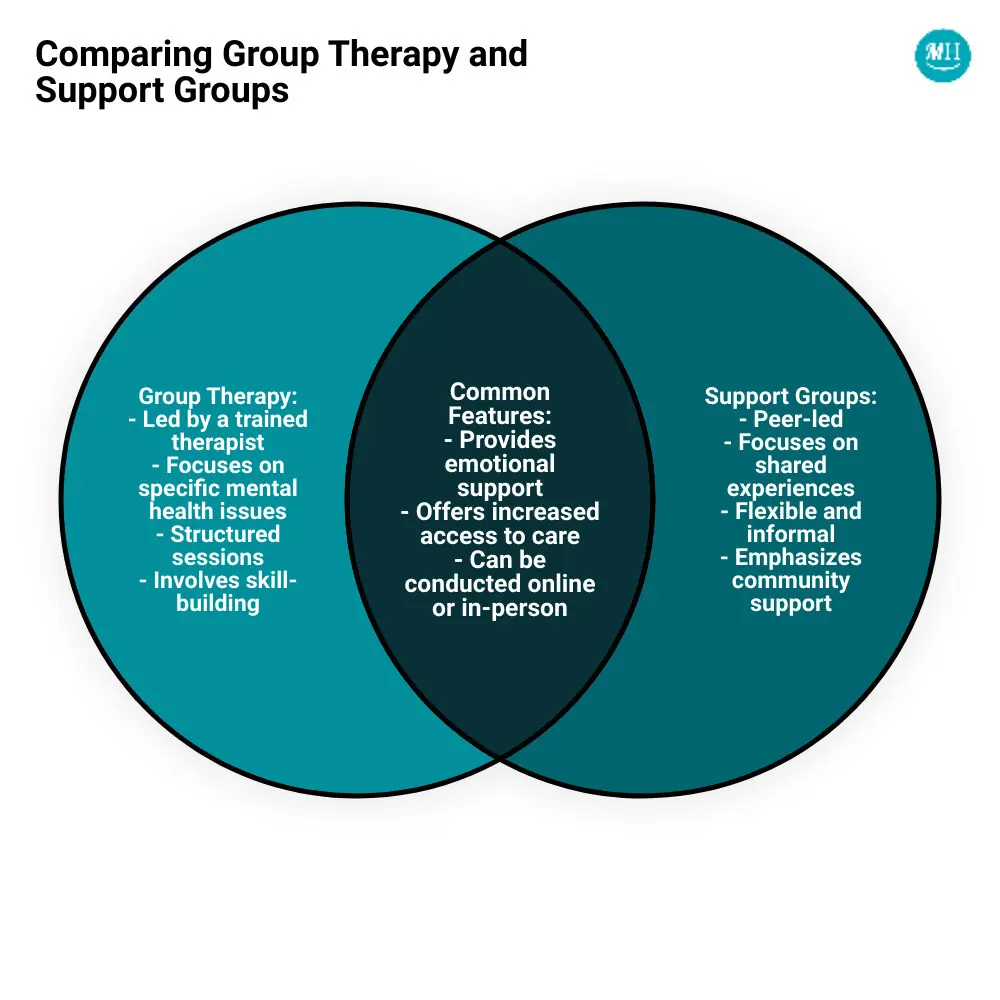
Peer support groups, such as those offered by the National Alliance on Mental Illness (NAMI) or NEA BPD are gatherings where people with mental health conditions or their families share experiences and gain support from others with similar challenges. NEA BPD offers a class for families called Family Connections. These groups are typically free or donation based, peer-led by trained facilitators who have lived experience with mental health conditions, and focus on mutual support rather than clinical treatment.
The key difference? IOPs and standard therapy are clinician-led treatment programs, while support groups are peer-led communities built on shared experience.Benefits of Support Groups While in IOP or Standard Therapy: Houston Mental Health Resources
The Research-Backed Benefits of Combining IOP with Support Groups
Enhanced Recovery Outcomes
The scientific evidence for peer support is compelling. Research shows that peer support interventions demonstrate modest positive effects on personal recovery and can reduce anxiety symptoms. When combined with clinical treatment like IOP, these benefits become even more pronounced.
A comprehensive meta-analysis found that peer support was associated with small but significant improvements in both clinical recovery and personal recovery outcomes for people with mental health conditions. While the effects may seem modest statistically, they translate to meaningful real-world improvements in quality of life, hope, and daily functioning.Benefits of Support Groups While in IOP or Standard Therapy: Houston Mental Health Resources
Reduced Hospitalization Risk
One of the most practical benefits of peer support is its impact on stability. Studies have shown that peer-delivered services generate superior outcomes in terms of reduced rates of hospitalization and fewer days spent as an inpatient. This is particularly important when you’re in an IOP, as maintaining stability and preventing relapse or crisis is a primary goal.Benefits of Support Groups While in IOP or Standard Therapy: Houston Mental Health Resources
Six Reasons to Add a Support Group to Your IOP Treatment
1. Extended Support Network Beyond Clinical Hours
Your IOP provides structured treatment during scheduled hours, but mental health recovery is a 24/7 journey. Support groups extend your network of understanding individuals who are available for connection, often meeting weekly or biweekly on different schedules than your IOP sessions.
Many support groups also offer online options, giving you access to peer support whenever you need it, not just during program hours.Benefits of Support Groups While in IOP or Standard Therapy: Houston Mental Health Resources
2. Real-World Application of Skills
In IOP, you learn valuable coping strategies and therapeutic techniques. Support groups provide a real-world setting to practice these skills with people who are navigating similar challenges. You can share what you’ve learned in IOP and hear how others apply similar concepts in their daily lives.
This practical reinforcement helps solidify the skills you’re developing in your clinical treatment.Benefits of Support Groups While in IOP or Standard Therapy: Houston Mental Health Resources
3. Perspective from People Further Along in Recovery
While your IOP peers may be at similar stages of treatment, support groups often include people at various points in their recovery journey. Meeting people who have successfully navigated challenges similar to yours provides hope and practical wisdom that clinical treatment alone cannot offer.
This modeling of recovery can be incredibly powerful. As research notes, peer providers can place higher expectations and demands on clients because they know from personal experience that recovery is possible but requires dedicated effort.Benefits of Support Groups While in IOP or Standard Therapy: Houston Mental Health Resources
4. Reduced Stigma and Increased Belonging
Even in the supportive environment of an IOP, there can be subtle differences between clinical staff and clients. In peer support groups, everyone is on more equal footing—you’re all individuals with lived experience of mental health challenges. This creates a unique sense of belonging and reduces internalized stigma.
The Substance Abuse and Mental Health Services Administration (SAMHSA)recognizes peer support as an essential component of recovery-oriented mental health services precisely because of its ability to reduce stigma and build community.Benefits of Support Groups While in IOP or Standard Therapy: Houston Mental Health Resources
5. Continuity of Support After IOP Graduation
IOPs are typically time-limited programs lasting 8-12 weeks. When you complete your IOP, you’ll need ongoing support as you transition back to regular life. Support groups provide that continuity—they’re a resource you can continue attending long after your IOP ends, helping prevent relapse and maintain the progress you’ve made.
Many people find that support groups become a permanent part of their recovery toolkit, something they continue participating in for months or years as needed.Benefits of Support Groups While in IOP or Standard Therapy: Houston Mental Health Resources
6. No Cost Barrier
While IOPs can be expensive even with insurance coverage, most peer support groups are completely free. Organizations like NAMI offer support groups at no cost, removing financial barriers to getting the support you need. This makes support groups an accessible addition to your treatment plan regardless of your financial situation.
Finding the Right Support Group for You
Types of Support Groups to Consider
Condition-Specific Groups Many organizations offer groups focused on specific diagnoses or challenges:
- Depression and anxiety support groups
- Bipolar disorder support groups
- PTSD and trauma recovery groups
- Dual diagnosis groups (mental health and substance use)
General Mental Health Support Groups NAMI Connection and similar programs welcome anyone with mental health challenges, regardless of diagnosis. .
Demographic-Specific Groups Some support groups cater to specific populations:
- Young adult groups (ages 18-30)
- LGBTQ+ mental health support
- Veterans and first responders
- Parents and caregivers
Where to Find Support Groups
NAMI (National Alliance on Mental Illness) NAMI has over 650 state and local affiliates across the country offering free support groups. Many now offer both virtual and in-person options. Use their locator tool to find groups near you.
SAMHSA National Helpline Call 1-800-662-4357 for free referrals to local support groups and mental health resources.
Online Support Communities If in-person attendance is difficult, many organizations offer virtual support groups via Zoom or other platforms, making participation possible from anywhere.
Houston-Specific Support Groups for Depression and Anxiety
If you’re in the Houston area and currently enrolled in an IOP, you have access to excellent local support group resources. Here are some of the top options specifically for depression and anxiety:
NAMI Greater Houston
NAMI Greater Houston offers multiple free support groups both online and in-person throughout the Houston area. Their groups include:
NAMI Connection Recovery Support Group – A 90-minute peer-led group for people living with mental health conditions, including depression and anxiety. Facilitators are trained individuals who have lived experience with mental illness. Pre-registration is required at least 4 hours before the meeting, with a maximum of 15 participants per session.
NAMI Family Support Group – If your family members want support while you’re in treatment, this free group is for partners, friends, and family members of those with mental health conditions.
Spanish-Language Support – NAMI Greater Houston offers Grupo de apoyo familiar for Spanish-speaking family members and loved ones.
All NAMI Greater Houston groups are free, confidential, and follow a structured format to ensure everyone has an opportunity to be heard.
re:MIND Houston
re:MIND specializes in support groups specifically for depression and bipolar disorders throughout the Houston area. Their groups are:
- Free and confidential with no registration required for adult in-person groups
- Professionally supervised with trained facilitators
- 90 minutes long unless otherwise noted
- Available in multiple Houston locations to serve different parts of the city
re:MIND offers various types of groups including those focused on specific demographics like LGBTQ+ individuals, adolescents, and military/veterans. They also provide groups in Spanish. You can visit their website to find a location near you or take their quiz to see if their support groups are right for you.
Hope and Healing Center & Institute
Located in Houston, Hope and Healing Center offers several support group options:
CBT-Based Support Group – A free six-week program that helps individuals facing mental health difficulties understand their thoughts, emotions, and behaviors. This is particularly valuable for those dealing with anxiety and depression.
NAMI Family Support Group – Meets the 4th Wednesday of each month at 6:30 pm in their Montieth Conference Room.
The center also hosts various other specialized support groups including grief support, caregiver support groups, and recovery-focused groups. All groups provide a safe environment to share concerns and receive emotional support.
Additional Houston Resources
The Mental Health Hub – Provides a comprehensive directory of Houston-area support groups organized by topic, making it easy to find depression and anxiety-specific resources.
Tips for Houston-Area Residents
- Consider multiple groups: Houston’s size means you have options. Try a few different groups to find the best fit for your needs and schedule.
- Mix peer and professional support: Consider attending both a peer-led group (like NAMI or re:MIND) and a therapist-led group for comprehensive support.
- Virtual options reduce barriers: Many Houston groups now offer virtual attendance, eliminating commute time and making it easier to participate even on difficult days.
- Language accessibility: If Spanish is your primary language, NAMI Greater Houston and re:MIND both offer Spanish-language support groups.
Manage Your Time and Energy
Be realistic about your capacity. While support groups are beneficial, you don’t want to overextend yourself. Start with one group meeting per week or biweekly and adjust based on how you feel.
If you’re feeling overwhelmed, it’s okay to take breaks or reduce your involvement temporarily. The flexibility of support groups means you can participate at your own pace.
What do you think? Would a support group be helpful for you?
f you’re in crisis, call the 988 Suicide and Crisis Lifeline (call or text 988) or visit your nearest emergency room. Support groups complement professional treatment but are not a substitute for emergency mental health care.
If you’re in crisis, call the 988 Suicide and Crisis Lifeline (call or text 988) or visit your nearest emergency room.